

Market volatility has returned with the announcement of Trump’s “ Liberation Day Tariffs.” These tariffs represent the latest in a series of events—both man-made and natural—that force markets to reset expectations about the future. While we’re currently experiencing an acute period of price discovery due to tariffs, understanding the broader concept of market volatility and price discovery can help investors maintain perspective.
Understanding the Stock Market
What is the Stock Market?
The stock market is a virtual meeting place where institutions, businesses, and individuals exchange, buy, or sell assets, stocks and bonds. These transactions collectively reflect knowledge and interpretations of data about the future (e.g., inflation, earnings, new laws, geopolitical events). The stock market essentially combines opinions about the future across various time horizons: 1 day, 1 week, 1 month, 1 year, 10 years and beyond.
What Does the Stock Market Do?
The stock market matches sellers and buyers anonymously. Sellers convert their assets into cash, while buyers gain ownership rights to assets. This ownership offers the possibility of asset growth and/or current or future cash flows. As economist Ben Graham noted, “In the short run, the stock market is a voting machine. But in the long run, it is a weighing machine.” Historically, markets have effectively recognized assets with genuine value.
Price Discovery Process
Markets constantly engage in price discovery —determining the best price for assets based on how new information impacts a company’s earnings and opportunities. This process involves shifting opinions based on data and who is interpreting that data.
Chart 1: Market Price Discovery Process
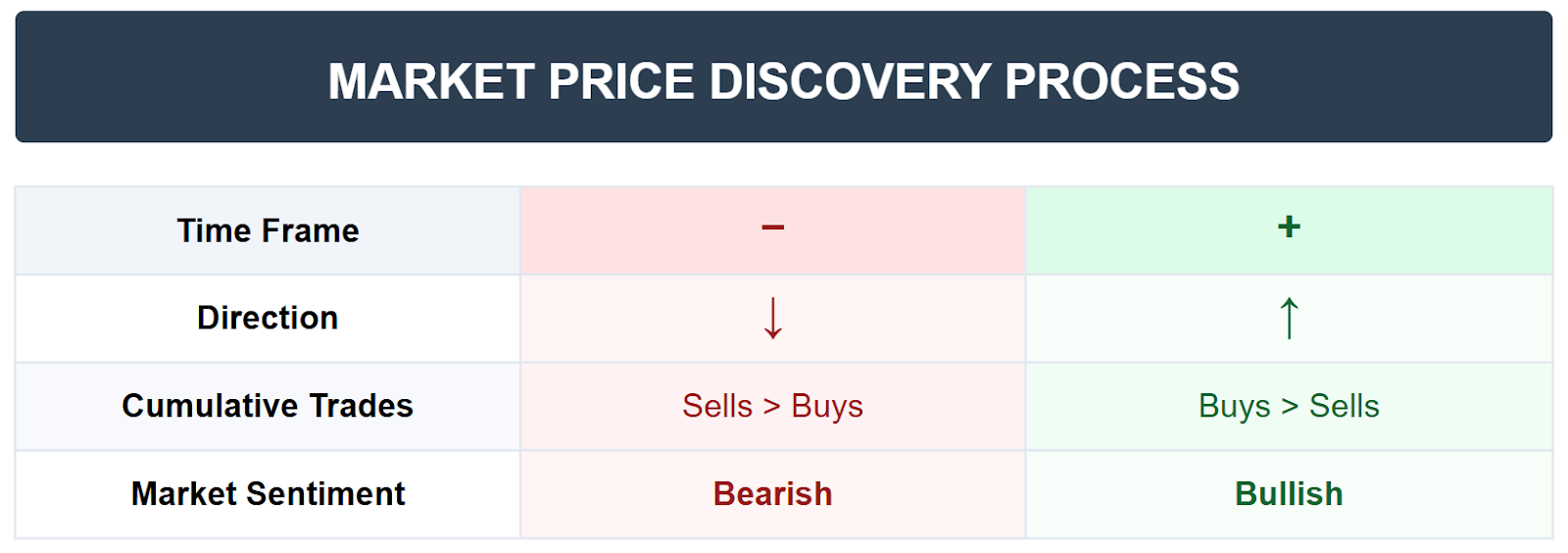
The chart above illustrates how trading activity accumulates over time periods, driving market direction and sentiment. When there are more sellers than buyers, markets decline, creating a negative, bearish sentiment. During shocks like the current tariff situation, this selling pressure typically leads to larger market declines while investors reset their understanding of the implications.
Volatility and Risk
Two fundamental questions about market behavior have the same answer, though with different time horizons:
- Why are markets so volatile during a decline?
- Why do markets slope upward over time?
The answer to both is one uncomfortable word: risk.
As Morgan Housel aptly put it, “ Risk is what’s left over when you think you’ve thought of everything. “ In the near term, risk manifests as fear that causes investors to react as markets whipsaw between gains and losses, even within a single day.
There are also periods when risk seems to play hide-and-seek, lulling traders and investors into thinking it’s easy to make money in markets. This apparent absence of risk often signals dangerous complacency about the future.
Long-Term Perspective
Despite short-term volatility, owning a slice of the global economic engine through public markets has historically been a risk worth taking. As expectations reset and markets digest how corporate earnings and cash flows will be impacted by events like tariffs, investors should reassess their goals and needs in light of new information.
Chart 2: Capital Markets Have Rewarded Long Term Investors
Over the long run, markets have rewarded investors who remain optimistic about the market’s price discovery process and its ability to generate profits over time. As the chart above demonstrates, despite numerous historical crises, betting against the broad market’s ability to eventually adjust to new data would have been a mistake.
Conclusion
The accumulation of trades creates market direction in the short run and drives sentiment (as measured by indicators like the Fear and Greed Index). During shocks like the Liberation Day Tariffs, there are typically more sellers than buyers, fueling negative sentiment while the market resets its understanding of the implications.
Individuals should create financial plans that address their priority of needs over time, recognizing that investing is a long-term process. For long-term investors with diversified portfolios, the daily fluctuations of price discovery are less significant than the market’s demonstrated ability to reward patience.
If you do not have a financial plan that has examined your goals and needs through past market shocks, our team stands ready to assist you.
By: Jason K. Branning, CFP®, RICP®. Jason is a CERTIFIED FINANCIAL PLANNER practitioner and Retirement Income Certified Professional®. He is the founder of Branning Wealth Management, a DBA of Asset Dedication, LLC, and specializes in retirement planning.
Sources:
1) Graham, Benjamin. The Intelligent Investor. HarperBusiness, 2003.
2) Housel, Morgan. The Psychology of Money: Timeless Lessons On Wealth, Greed, and Happiness. Harriman House, 2020.
Disclosures
The information provided in this blog post is for informational purposes only and should not be construed as investment advice or a recommendation to buy, sell, or hold any security. The opinions expressed herein are those of Branning Wealth Management (“BWM”) and are subject to change without notice. Information throughout this blog is obtained from sources which we believe reliable, but we do not warrant or guarantee the timeliness, accuracy or completeness of this information and the information presented should not be relied upon as such.
Investing involves risk, including the potential loss of principal. Past performance is not indicative of future results. BWM does not provide tax, legal, or accounting advice, and the information contained herein should not be relied upon for those purposes. Please consult with your financial advisor, attorney, or tax professional regarding your individual circumstances before making any investment decisions.
This blog contains links to third-party websites. These links are provided solely as a convenience to you and does not imply an affiliation, sponsorship, endorsement, approval, investigation, verification, or monitoring by BWM of the contents on such third-party websites. BWM is not responsible for the content of any website owned by a third party that may be linked to this blog.
Branning Wealth Management dba Asset Dedication is an investment adviser registered with the SEC. Registration does not imply a certain level of skill or training. For more information, please visit our website at https://branwealth.com/.
The post Liberation Day Tariffs & Market Price Discovery appeared first on Branning Wealth Management.